Choosing the best material for Disposable Plastic Cups depends on how the cup will be used, handled, and discarded. A clear PET cup may suit cold drinks, café counters, and events where appearance matters. It feels firm in the hand and displays layered beverages well. Polypropylene cups tolerate more heat and bending, making them practical for warm drinks or busy catering stations. However, they may look less transparent. Polystyrene can provide lightness and insulation, yet its environmental reputation and recycling limitations deserve careful consideration.
Material selection should begin with real service conditions, not marketing claims. Consider liquid temperature, cup thickness, sealing equipment, transport distance, and local recycling facilities. A cup that performs well in a laboratory may deform beside a hot beverage machine. That detail matters. Food-contact compliance, odor resistance, leak protection, and consistent manufacturing quality also affect reliability. Certifications and supplier test reports can support responsible decisions, but they do not answer every question.
There is no universal winner.
Even recyclable plastic requires proper collection and processing. Compostable options, such as PLA, may sound attractive but often need suitable industrial composting systems. Those systems are not available everywhere. This is where assumptions can fail. Businesses should compare product performance, total material use, customer expectations, and actual waste infrastructure. Cost matters too, although the cheapest cup may create more waste through leakage or early disposal. The best Disposable Plastic Cups material is therefore a balanced choice, tested under real conditions and reviewed honestly when results fall short.
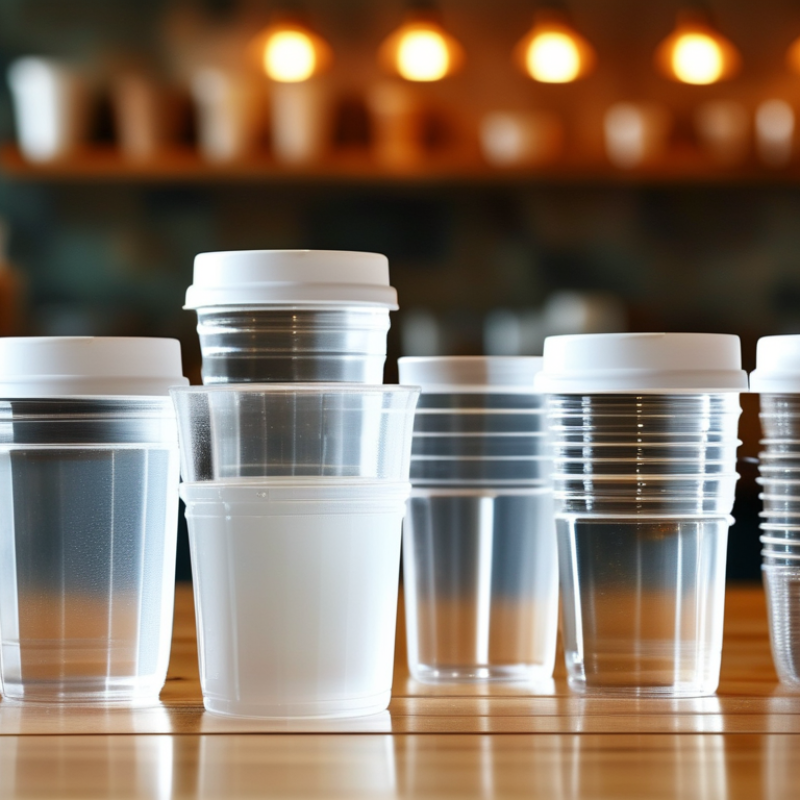
When selecting disposable cups, the resin matters more than thickness or appearance. Polyethylene terephthalate (PET) creates clear, rigid cups for cold drinks. It has good impact resistance and does not easily absorb flavors. Polypropylene (PP) is lighter and handles warmer liquids better, although it usually looks less transparent. Polystyrene (PS) offers stiffness at a low cost, but it can crack under impact and performs poorly with heat. Compostable-looking cups may use polylactic acid (PLA), which requires controlled industrial composting conditions.
The numbers deserve attention. PlasticsEurope reported that packaging represented 39.6% of European plastics demand in 2022. The OECD’s Global Plastics Outlook estimated that only 9% of global plastic waste was recycled in 2019. These figures show why material selection should include end-of-life planning, not only production cost. A clear cup can look recyclable. Appearance proves little. Local collection systems, cup design, and contamination strongly affect actual recovery.
For cold beverages, PET often balances clarity, strength, and consumer acceptance. PP suits applications requiring more flexibility or moderate heat resistance. PS may work for short-use service, but its brittle behavior needs careful testing. PLA can support specific composting programs, yet it may soften sooner than expected. Food-contact compliance depends on the complete formulation, additives, and migration testing, not the resin name alone. In practical quality checks, examine rim strength, leakage, stacking pressure, and condensation after several minutes. I would not choose one “best” plastic without testing the cup against its real temperature, drink, and disposal route.
Choosing the best material depends on temperature, clarity, strength, and disposal conditions. There is no perfect cup. Each polymer solves one problem while creating another. For cold drinks, polyethylene terephthalate (PET) offers strong clarity and a firm feel. It also resists cracking during normal handling. Polypropylene (PP) is lighter and handles warmer liquids better, but it usually looks less transparent. Polylactic acid (PLA) can suit cold beverages, although it often requires industrial composting facilities. Availability matters more than many buyers expect.
Material thickness also changes performance. A thin cup may reduce material use, but it can bend near the rim. A thicker wall improves grip and impact resistance, yet it increases weight and waste. In practical handling checks, the rim, base, and sidewall deserve equal attention. Moisture, acidic drinks, and storage temperature can affect durability. Supplier specifications should confirm food-contact suitability, temperature limits, and test methods. Some material claims sound impressive. They still need evidence.
Tips: Match PET with clear, chilled drinks. Choose PP when warmth and flexibility matter. Consider PLA only when suitable composting systems exist. Test filled cups before large orders. A small trial can reveal leaks, tipping, or unpleasant odors. I would not judge quality by appearance alone. A cup that looks strong may fail when stacked, squeezed, or exposed to heat.
Choosing a disposable cup material starts with the drink, serving temperature, and disposal system. In practical use, PET offers clear walls, good stiffness, and strong resistance to oils and acidic beverages. It suits chilled water, juice, and iced coffee. PET also shows the contents well, which helps portion control. However, it can deform near hot filling temperatures unless the design and grade are suitable. Thin PET cups may feel sharp after crushing. This detail is easy to overlook.
PP handles warmer drinks better than PET and usually keeps useful flexibility during transport. It is opaque or translucent, depending on processing, and often resists cracking when dropped. For reusable-feeling takeaway cups, PP can be a practical choice. It still needs proper temperature testing, because lids, seams, and printed areas may fail before the cup body. PS is lightweight, rigid, and inexpensive. Its bright clarity can look attractive, but it is more brittle and performs poorly with high heat. It can also fragment into small pieces when crushed, complicating collection and sorting.
PLA is made from renewable plant-based feedstocks and can appear similar to clear plastic. Yet its heat resistance is limited, so hot tea may soften or distort the cup. Many PLA products require commercial composting conditions, not a backyard compost bin. Availability varies sharply by region. That matters. Selecting PLA without checking local facilities can create a green claim with little practical benefit. Material choice should also consider wall thickness, transport distance, contamination, and actual recovery rates. I would avoid calling any option universally best. Lab data helps, but cup performance in a busy café can be less predictable. A small trial with hot, cold, oily, and acidic drinks often reveals problems before mass production.
| Evaluation Dimension | PET Cups | PP Cups | PS Cups | PLA Cups |
|---|---|---|---|---|
| Full Material Name | Polyethylene Terephthalate | Polypropylene | Polystyrene | Polylactic Acid |
| Typical Appearance | Clear, glossy, and highly transparent | Clear to translucent; clarity depends on grade and processing | Clear, glossy, or white; often used for rigid and foam cups | Clear and glossy, with a glass-like appearance |
| Typical Density | Approximately 1.34–1.39 g/cm³ | Approximately 0.90–0.91 g/cm³ | Approximately 1.04–1.06 g/cm³ | Approximately 1.24–1.27 g/cm³ |
| Heat Resistance | Suitable mainly for cold drinks; standard cups can deform with hot liquids | Best among the four for hot-fill and microwave-related applications; performance depends on cup design and grade | Generally suitable for cold and mildly warm drinks; not recommended for very hot liquids | Generally intended for cold drinks; heat resistance is limited unless specially modified |
| Approximate Melting or Softening Range | Melting range: approximately 250–260°C; cup performance is usually limited well below this range | Melting range: approximately 160–170°C | Softening transition is approximately 90–105°C; it can deform before melting | Melting range: approximately 150–180°C; glass-transition temperature is commonly around 55–60°C |
| Impact Resistance | Good; offers a strong balance of rigidity and toughness | Very good; flexible and resistant to cracking under impact | Fair to poor in standard rigid forms; can crack or fracture under impact | Fair; generally more brittle than PET and PP |
| Weight Efficiency | Moderate; higher density means more material mass at the same volume | Excellent; the lowest density of the four | Good, although rigid cups may be brittle | Moderate to good, depending on wall thickness and design |
| Moisture Barrier | Very good resistance to water and moisture | Very good resistance to water and moisture | Good moisture resistance | Good moisture resistance for typical cold-drink use |
| Typical Best Uses | Cold beverages, iced drinks, juice, smoothies, and display-focused applications | Hot or cold beverages, reusable-style foodservice items, and applications needing toughness | Cold beverages, short-service applications, and low-cost foodservice products | Cold beverages and applications seeking bio-based content with access to suitable composting facilities |
| Recycling Profile | Widely accepted in many recycling systems; acceptance depends on local collection rules | Accepted in some recycling systems, with availability varying significantly by location | Limited acceptance in many municipal recycling systems | Usually not compatible with conventional PET or PP recycling streams; requires dedicated processing |
| Compostability | Not compostable | Not compostable | Not compostable | Industrially compostable in suitable facilities; generally does not break down quickly in home compost or natural environments |
| Key Advantages | Excellent clarity, good strength, strong moisture barrier, and established recycling value | Low weight, strong impact resistance, and superior heat performance | Low cost, good clarity, and easy processing | Bio-based feedstock potential, attractive clarity, and suitability for cold drinks |
| Main Limitations | Not ideal for hot beverages; heavier than PP | Often less crystal-clear than PET; recycling access varies | Brittle, limited heat performance, and low recycling availability | Limited heat resistance and dependent on industrial composting infrastructure |
| Overall Recommendation | Best for clear, durable cold-drink cups | Best for hot drinks and high-impact applications | Best when low cost is the primary requirement and local regulations permit its use | Best when a cold-drink application has access to industrial composting and appropriate waste sorting |
The best material for disposable plastic cups depends on the drink, temperature, and disposal system. In food-service testing, polypropylene performs well with warm beverages because it tolerates heat and resists cracking. PET offers strong clarity and stiffness for cold drinks. Both materials are commonly evaluated for food-contact safety, but quality depends on manufacturing controls and proper use.
Safety should come before appearance. A cup must be designed for its intended temperature range. Heat can soften some plastics and increase deformation. Clear cups also need enough strength to prevent leaks during transport. Environmental performance is less simple. Lightweight plastic uses fewer raw materials, yet poor collection can erase that advantage. Recyclability depends on local facilities, cup design, and clean sorting. Compostable materials may sound better, but they often require industrial composting. They may not break down in ordinary outdoor conditions.
Tips: Match the material to the beverage. Check the supplier’s food-contact documentation. Avoid using cold-drink cups for hot liquids. Prefer simple designs without unnecessary layers or coatings. Encourage users to empty and sort cups correctly.
A practical choice is rarely perfect. I used to view compostable cups as an obvious answer, but disposal conditions changed that judgment. The most responsible option may be a recyclable cup with reliable collection, not a theoretically greener material that cannot be processed nearby. Testing, transparent documentation, and local waste data provide stronger guidance than advertising claims.
What Is the Best Material for Disposable Plastic Cups?
How to Choose the Best Material for Your Needs
The best cup material depends on temperature, drink type, handling, and local waste facilities. For cold water, juice, and iced coffee, PET offers strong clarity and a crisp appearance. It is usually rigid and helps customers see the drink. However, PET is not suitable for very hot liquids. Heat can soften or deform it.
Polypropylene, or PP, is a practical choice for warmer drinks and repeated handling during busy service. It tolerates more heat than many common cup materials, but the exact limit depends on wall thickness and design. Always check the supplier’s temperature range. A thicker rim also improves comfort and reduces spills. Small details matter.
PLA can suit cold drinks when industrial composting is genuinely available. Without the correct facility, its environmental advantage may be limited. This point is often overlooked. Before choosing it, verify local collection rules and accepted processing conditions. A clear cup can look premium, yet appearance may mislead the buyer. Test filled cups during transport, stacking, and refrigeration. Check for leaks after several hours. Review food-contact documentation, migration testing, and production consistency from a qualified supplier. Cost matters, but a cheaper cup may fail under real service conditions. There is no perfect material. The right choice is the one that matches actual use, not assumptions.
: PET often suits cold beverages because it is clear, rigid, and resistant to impact. It also absorbs few flavors.
Polypropylene suits warmer drinks and flexible applications. It usually looks less transparent than PET.
Polystyrene is stiff and inexpensive, but it can crack during impact. It also performs poorly with heat.
No. Some use PLA, which often needs controlled industrial composting. Outdoor conditions may not break it down effectively.
No. Appearance proves little. Local facilities, cup design, and food contamination determine actual recovery.
Test rim strength, leakage, stacking pressure, and condensation after several minutes. Real-use testing matters.
Not necessarily. Heat can soften plastic and increase deformation. Use cups designed for the intended temperature.
Request food-contact compliance documents, formulation details, and migration-testing results. The resin name alone is insufficient.
There is no universal answer. A recyclable cup with reliable local collection may outperform a compostable cup without processing access.
Empty the cup completely and follow local sorting instructions. Simple designs are easier to process. Cleaner is better.
Choosing the best material for Disposable Plastic Cups depends on the intended use, required performance, and environmental priorities. Common options include PET, PP, PS, and PLA, each offering different advantages. PET is known for clarity, strength, and suitability for cold beverages, while PP provides better heat resistance and flexibility. PS is lightweight and economical, but it may be less durable and suitable for demanding applications. PLA, made from renewable resources, can be an appealing option when compostable materials and appropriate disposal systems are available.
When comparing cup materials, consider transparency, impact resistance, temperature tolerance, stiffness, leakage prevention, and storage needs. Safety and performance should always come first, including compatibility with the beverage and expected serving conditions. Environmental considerations also involve production, transportation, recycling, composting infrastructure, and responsible waste management. The best choice is therefore not universal: select the material that balances functionality, cost, user experience, and end-of-life options for your specific application.

Santai Plastic