Choosing a China-based manufacturer for a Plastic Cup With Straw involves more than comparing prices. Buyers need to assess cup capacity, wall thickness, lid fit, straw diameter, and how the product feels in daily use. A cup that looks sturdy in a catalog may flex when filled with a cold drink. Small details matter.
A reliable sourcing process starts with clear product requirements and direct questions. Ask which materials are available, whether colors and logos can be customized, and how samples are checked before production. Request details about production capacity, lead times, packaging, and quality inspections. Then compare the sample with the written specifications. Check for leaks, loose lids, rough edges, and straws that bend too easily. Test it with the drinks your customers actually serve. A quick desk review is not enough.
Look for a manufacturer that explains its process plainly and can provide relevant product and factory information for review. Do not treat attractive photos or a low quotation as proof of consistent quality. Ask how defects are recorded and handled, and confirm key specifications before placing a larger order. A careful supplier should welcome reasonable questions. Still, no sample guarantees every production run will match perfectly. That part deserves attention. This guide outlines practical points for evaluating manufacturers, comparing product options, and making a more informed purchasing decision. It also leaves room for honest uncertainty: the right choice depends on your market, budget, and intended use.
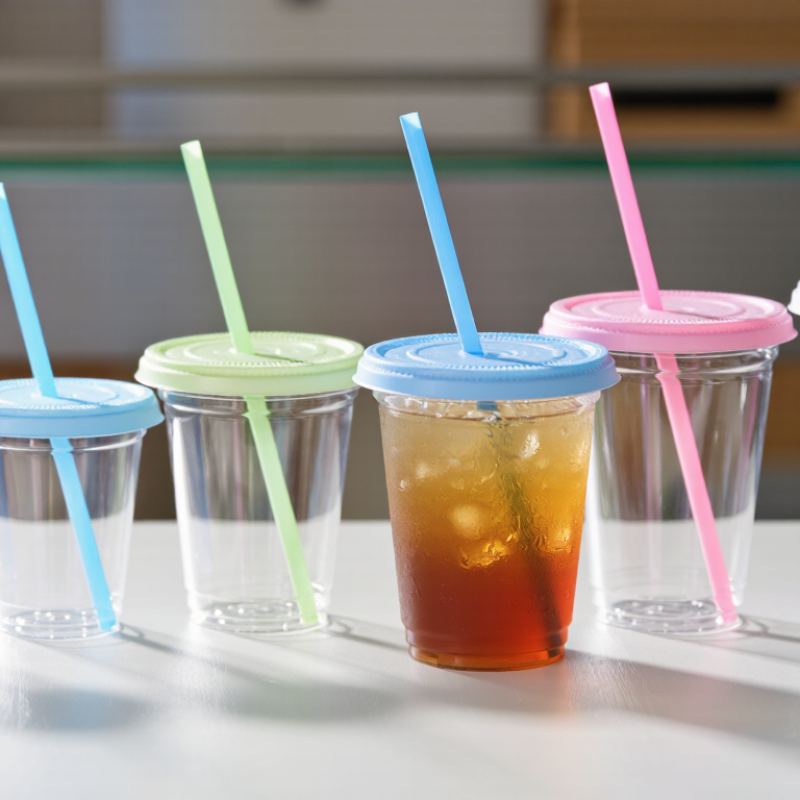
China’s plastic cup with straw manufacturing industry combines resin processing, cup forming, printing, and assembly. A dependable product needs consistent wall thickness, a smooth rim, a secure lid, and a straw that fits without excessive force. Small details matter. On a 400-milliliter cup, a loose lid can turn a stable stack into a spill risk. Buyers should examine production samples and quality records, not rely on catalogue photos alone.
The OECD’s Global Plastics Outlook (2022) estimates that global plastic production reached 460 million tonnes in 2019, twice its 2000 level. The report also estimates that only 9% of plastic waste was ultimately recycled. These are global figures, not China-specific cup data, but they highlight why material efficiency and clear production specifications matter. Manufacturers can reduce avoidable scrap through stable forming temperatures, careful trimming, and routine checks. Still, a checklist may miss a flaw that appears only after repeated use.
Tips: Test cup, lid, and straw together with water. Check for leaks, fit, and sharp edges. Ask suppliers how they track batch consistency and material specifications; vague answers deserve a closer look.
Plastic cups with straws come in several forms: single-wall cups, thicker insulated-style cups, and clear cups paired with flat or dome lids. PET is popular for cold drinks because it offers clear visibility and a firm feel. PP is lightweight and can tolerate more heat than PET, though its clarity varies by grade. Polystyrene cups are rigid but can feel brittle. PLA is plant-derived, yet composting depends on suitable facilities and conditions. Not every compostable cup will break down in a backyard bin.
Fit matters. A straw opening should match the straw’s diameter, while the lid must stay secure during carrying. Small details count. In supplier checks, inspect rim consistency, lid fit, and whether cups stay stable when filled; sample tests can reveal problems that a product sheet misses.
The OECD’s Global Plastics Outlook reports that 353 million tonnes of plastic waste were generated worldwide in 2019, and only 9% was ultimately recycled. Those figures cover plastics broadly, not cups alone.
They are still a useful reminder to compare material choice, cup weight, and local collection options rather than treating resin names as a complete sustainability measure. A clear cup is not automatically the better choice.
China Best Plastic Cup With Straw Manufacturer
Manufacturing Process and Quality Control Standards
A dependable cup-and-straw line starts with controlled raw materials. Incoming resin is checked against supplier specifications, while batch records preserve traceability. Depending on the design, cups may be injection-molded or thermoformed, and straws are typically extruded and cut to length. Operators monitor heat, pressure, and cycle time because small shifts can cause thin walls, rough rims, or straws that bend too easily. Details matter. Samples should be checked for dimensions, weight, leakage, lid fit, and straw passage before production continues.
Quality control should combine documented procedures with routine testing. ISO 9001 offers a framework for managing processes, while ISO 22000 addresses food-safety management; neither standard alone proves that a finished cup suits every market or use. A manufacturer still needs appropriate material documentation and product testing for its intended application. The OECD’s Global Plastics Outlook reports that plastic waste reached 353 million tonnes in 2019, with packaging representing about 40 percent. That figure makes material efficiency worth tracking, not just appearance. Scrap rates and rejected units deserve regular review. No line is perfect. Even a detailed checklist can miss a recurring defect if teams record results but do not investigate patterns.
Example lot-audit defect rates compared with illustrative internal acceptance limits. These figures are for demonstration only; actual limits should be set for the product, materials, and applicable regulations.
Quality checks can include leak testing, dimensional inspection, straw-fit checks, and visual inspection. Monitoring defect rates at each checkpoint helps identify process issues before products are packed and shipped.
Customization, Safety, and Packaging Options
A reliable plastic cup supplier should turn a drawing into a usable production sample. Custom options may include cup capacity, wall thickness, color, lid shape, straw length, and printed artwork. Small details matter. A straw that feels too short can make the cup uncomfortable for children and adults.
Experienced manufacturers should explain material choices clearly. Food-contact plastic must match the intended use, temperature range, and destination market requirements. Buyers should request test reports, material declarations, and batch traceability before mass production. Clear inspection steps can cover odor, leakage, lid fitting, print quality, and straw connection. A perfect-looking sample can still fail during transport, so practical testing is essential.
Packaging needs the same attention. Individual bags, paper sleeves, inner cartons, and export cartons can be adjusted for retail or wholesale shipments. Drop testing may reveal crushed corners or loose lids. Recycled packaging sounds attractive, but weak cartons can increase product loss. That trade-off deserves an honest review. Some designs may also need extra separators, especially when cups have raised prints or unusual shapes. Small improvements often reduce complaints later.
A reliable Chinese plastic cup with straw manufacturer should offer clear answers about materials, tooling, and production capacity. Ask whether cups are made from food-contact-grade material and request relevant test documents for the exact product. A certificate for another cup design may not apply. Details matter.
Request a sample before approving a large order. Check the rim for rough edges, press the lid to test its fit, and leave the cup filled with water for several hours. Test whether the straw bends, leaks, or slips out. Also review print quality and packaging; small flaws can become costly across a full shipment. Discuss minimum order quantities, lead times, inspection steps, and how defects are handled. A factory may sound polished on a call, yet still miss details in writing.
Tips: Compare at least two samples against the same checklist. Ask for dated production photos or a live factory walkthrough. Confirm specifications in a signed order document, including cup size, material, color, and packaging. Keep one approved sample for comparison. No supplier is perfect, and a delayed reply deserves a follow-up, not an assumption.
Common options include single-wall cups, insulated-style cups, and clear cups with flat or dome lids.
PET offers clear visibility and a firm feel for cold drinks. PP is lighter and handles more heat.
No. Some plant-derived materials need commercial composting facilities and suitable conditions. Home composting may not work.
Match the straw opening with the straw diameter. Check the lid, too. It should stay secure when carried.
Inspect dimensions, weight, leakage, lid fit, rim consistency, and straw passage. Filled-cup stability matters.
Heat, pressure, or cycle changes may create thin walls, rough rims, or weak straws. Small shifts matter.
Options may include capacity, wall thickness, color, lid shape, straw length, and printed artwork.
Test odor, leakage, printing, straw connection, and transport durability. A perfect sample can still fail later.
Review individual bags, paper sleeves, inner cartons, and export cartons. Drop tests can expose crushed corners.
No. Compare cup weight, material efficiency, scrap rates, and local collection options. Appearance can mislead.
China’s plastic cup with straw industry serves a wide range of needs, from everyday beverage service to events and food packaging. A Plastic Cup With Straw can be made from different materials, such as PET, PP, or other suitable plastics, with choices in cup shape, capacity, wall thickness, and straw design. Each material offers distinct characteristics in clarity, flexibility, durability, and suitability for different drinks, so product selection should match its intended use.
Reliable manufacturing involves controlled molding, trimming, assembly, and inspection to help ensure consistent dimensions, secure straw fit, and clean finishes. Buyers can also discuss customization, including colors, printing, cup lids, straw styles, and packaging formats, while confirming that materials and production practices meet relevant safety and quality requirements. When choosing a Chinese manufacturer, assess production experience, quality-control procedures, sample consistency, communication, lead times, and packaging capabilities. Clear specifications and careful evaluation can help create a dependable partnership and a product that meets practical and presentation needs.

Santai Plastic