China Top 10 Disposable Cup Manufacturers for Global Buyers

Time:2026-09-06 Author:Aria
0%

Choosing reliable Disposable Cups manufacturers requires more than comparing catalog prices. Global buyers must examine material quality, production capacity, customization options, and export experience. This guide introduces China’s top 10 manufacturers for international sourcing projects. It focuses on practical evidence, including factory capabilities, product ranges, quality controls, and service responsiveness.

A suitable supplier should explain its paper, plastic, or biodegradable cup materials clearly. It should also provide samples, production details, and consistent specifications. Small details matter. Check rim strength, coating uniformity, printing accuracy, and carton protection. These factors affect customer satisfaction during storage and transport. Verified certifications and transparent communication can reduce purchasing risks. However, no ranking is perfect. Supplier performance may change with equipment, staff, or order volume. Buyers should still request recent samples and confirm current compliance documents before signing contracts.

The selected manufacturers serve cafés, beverage chains, distributors, catering companies, and private-label brands. Their differences may involve minimum order quantities, lead times, mold costs, and packaging flexibility. Some offer rapid customization. Others provide stronger support for large-scale orders. Experience matters, but it should be supported by measurable quality practices. Ask direct questions. Request clear answers.

This overview is designed to help purchasing teams compare suppliers with greater confidence. It does not replace factory audits or product testing. Yet it can provide a practical starting point for identifying capable partners, avoiding vague promises, and building a more reliable sourcing process.
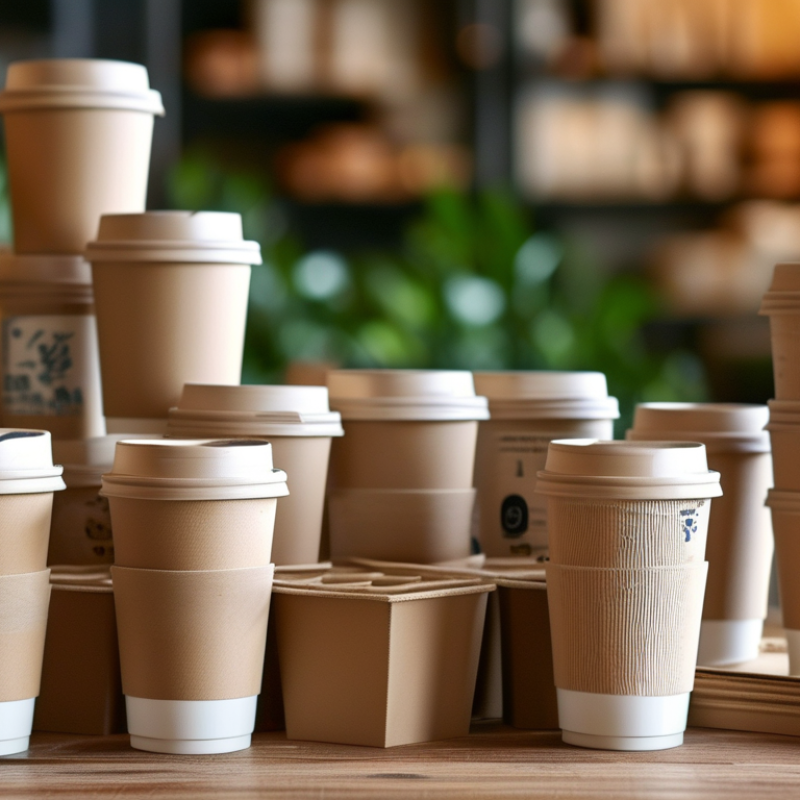
China Top 10 Disposable Cup Manufacturers for Global Buyers

Disposable Cup Manufacturing: Materials, Processes, and Quality Standards

China’s disposable cup sector serves global buyers with paper, plastic, and plant-based materials. Grand View Research estimated the global disposable cups market at about USD 13 billion in 2022, with growth near 6% annually through 2030. That expansion increases pressure on factories to prove material safety, consistency, and traceability.

Paper cups usually combine food-grade paperboard with polyethylene or water-based coatings. Plastic cups commonly use PP or PET, selected for clarity, stiffness, and temperature performance. Some factories now test fiber-based barriers for industrial composting. However, “compostable” requires evidence, not marketing language. Buyers should request EN 13432 or ASTM D6400 test results, when applicable.

Manufacturing begins with roll inspection, printing, die-cutting, forming, and heat sealing. Quality teams should check rim diameter, sidewall strength, leakage, coating adhesion, and odor. ISO 2859-1 sampling procedures can support statistically controlled inspections. Food-contact compliance may also require migration testing under applicable regulations, including EU Regulation 10/2011 for plastics. Small defects matter. A weak seam can leak during delivery.

The most reliable suppliers retain batch records, calibration logs, and third-party laboratory reports. They should also explain recycled content and barrier composition clearly. A 2023 packaging analysis from Smithers highlighted rising demand for recyclable and fiber-based formats, but material performance remains uneven. No factory is perfect. Even strong production lines need corrective-action reviews when sealing temperature, moisture, or forming pressure drifts.

Disposable Cup Manufacturing: Typical Material Thickness by Cup Type

This chart shows representative midpoint values from commonly specified wall-thickness ranges for disposable cups. Paperboard cups are typically coated for liquid resistance, while PP, PET, and PLA cups are produced through thermoforming or injection molding. Actual specifications vary according to capacity, rigidity, sealing performance, temperature resistance, and applicable food-contact requirements.

How to Evaluate China’s Top Disposable Cup Manufacturers

China Top 10 Disposable Cup Manufacturers for Global Buyers

When evaluating China’s top disposable cup manufacturers, look beyond product photos and catalog prices. Request physical samples in your required size, rim design, coating, and packaging format. Check whether the cup keeps its shape after holding hot or cold liquids. A weak rim is an immediate warning.

Review the factory’s production process, not only its trading documents. Ask about raw material sourcing, printing controls, sealing tests, and batch inspection records. Food-contact compliance documents should match your destination market and current product specifications. Confirm production capacity with recent orders, not optimistic estimates. Factory videos can help, but an independent audit offers stronger evidence. Communication matters too. Delayed answers often become delayed shipments.

Tips: Compare at least three samples under identical conditions. Record leakage time, odor, stiffness, and surface finish. Ask for a clear complaint-handling process before placing an order. A low price may hide thinner material or higher defect rates. However, expensive pricing does not automatically mean better quality. No manufacturer is perfect. Even a capable factory may miss a color shade or packing detail. Leave room for corrective testing, and put agreed standards in writing.

China’s Leading Disposable Cup Manufacturers for Global Buyers

China’s leading disposable cup manufacturers for global buyers combine scale with practical production control. Many supply paper, PP, or PET cups for cafés, catering companies, events, and food-service distributors. Their factories may offer multiple capacities, lid options, wall structures, and printing methods. Buyers should inspect material specifications, production samples, and food-contact documentation before placing large orders.

A reliable manufacturer can explain resin grades, paper thickness, sealing temperatures, and carton loading clearly. Factory audits should review clean production areas, storage conditions, quality records, and batch traceability. Leak testing matters. So does rim strength. During supplier evaluations, request samples from normal production, not only specially prepared pieces. Confirm minimum order quantities, lead times, loading ports, and replacement procedures in writing.

I have learned that a polished sample can hide inconsistent sealing on a busy production line. That risk deserves attention. Some suppliers communicate quickly but provide weak technical evidence. Others have strong equipment yet respond slowly to design changes. When comparing the top ten manufacturers, global buyers should assess both capabilities and working habits. A transparent supplier will discuss defects, testing limits, and realistic delivery dates without exaggerated promises. Small details matter, such as whether lids fit after temperature changes or cartons remain dry during humid-season storage.

China Top 10 Disposable Cup Manufacturers for Global Buyers - China’s Leading Disposable Cup Manufacturers for Global Buyers
Profile Primary Product Formats Typical Materials Common Capacities Barrier or Coating Options Lid Compatibility Printing Capability Typical MOQ Typical Lead Time Common Buyer Documentation
Profile 01 Hot drink cups Cold drink cups Food-grade paperboard; polyethylene or water-based dispersion coating 4 oz, 6 oz, 8 oz, 12 oz, 16 oz, 20 oz Single-wall and double-wall structures; standard moisture barrier Compatible with matching paper and plastic flat lids in standard diameters Flexographic printing; up to 6 colors for selected cup constructions Approximately 50,000 pieces per design About 25–35 days after artwork approval Food-contact declaration, material specification, certificate of analysis, carton packing details
Profile 02 Ripple-wall cups Insulated cups Virgin paperboard with corrugated outer paper layer 8 oz, 10 oz, 12 oz, 16 oz, 20 oz PE-coated inner layer; enhanced heat insulation through multi-layer construction Matching sip lids and standard takeaway lids Offset or flexographic printing depending on structure and order volume Approximately 30,000 pieces per size and design About 30–40 days after final confirmation Paper source information, food-contact compliance file, packing list, test reports when required
Profile 03 Compostable cups Plant-based packaging Paperboard with PLA or aqueous coating 8 oz, 12 oz, 16 oz, 20 oz Compostable lining options; performance depends on certification and end-use conditions Compatible with selected compostable or conventional lids Water-based or conventional food-safe inks; custom artwork available Approximately 50,000 pieces per specification About 35–45 days, including material preparation Compostability certificate where applicable, food-contact declaration, coating specification, test documentation
Profile 04 Custom printed cups Promotional cups Food-grade coated paperboard in various grammages 4 oz, 6 oz, 8 oz, 12 oz, 16 oz, 22 oz Single PE coating, double PE coating, or water-based barrier options Paper, PP, PET, and selected plant-based lid formats High-resolution flexographic printing; color matching based on approved proof Approximately 100,000 pieces per artwork About 30–45 days after proof approval Artwork proof, material data sheet, ink information, food-contact statement, export carton specifications
Profile 05 Paper soup cups Noodle containers Thicker paperboard with moisture-resistant inner lining 8 oz, 12 oz, 16 oz, 24 oz, 32 oz Double PE coating or selected water-based coating for liquid and semi-liquid foods Vented paper or plastic lids in compatible top diameters Flexographic printing; simple and multi-color designs supported Approximately 50,000 pieces per size and design About 25–40 days after production confirmation Food-contact declaration, leakage test information, dimensional specification, packing details
Profile 06 Ice cream cups Dessert cups Paperboard or coated paper suitable for chilled applications 3 oz, 4 oz, 5 oz, 6 oz, 8 oz, 12 oz Moisture-resistant coating; selected constructions support frozen dessert use Snap-on paper or plastic lids for matching rim dimensions Flexographic printing with food-safe inks Approximately 50,000 pieces per design About 25–35 days after artwork approval Material specification, food-contact statement, dimensional drawing, packaging and pallet information
Profile 07 Clear plastic cups Cold beverage cups PP, PET, or rPET, depending on clarity and recycling requirements 9 oz, 12 oz, 16 oz, 20 oz, 24 oz, 32 oz Uncoated molded plastic; optional surface decoration or shrink-sleeve application Flat lids, dome lids, and straw-slot lids in matching diameters Offset printing, screen printing, or sleeve decoration depending on material Approximately 100,000 pieces per size and decoration About 35–50 days for custom tooling or decoration Resin identification, food-contact declaration, migration test report, recycling information
Profile 08 Bagasse cups Fiber-based drinkware Molded sugarcane fiber or other plant-fiber pulp 6 oz, 8 oz, 10 oz, 12 oz, 16 oz Fiber barrier with optional biopolymer or water-based lining Compatible lids depend on rim design and cup dimensions Limited direct printing or external sleeve printing for selected models Approximately 50,000 pieces per model About 40–60 days for molded-fiber production Fiber composition, food-contact declaration, compostability documents where applicable, packing specification
Profile 09 Vending cups Office coffee cups Lightweight food-grade paperboard or molded PP 4 oz, 6 oz, 7 oz, 8 oz, 9 oz, 12 oz Standard liquid-resistant coating for hot and cold beverages Designed for selected vending machines or compatible standard lids Plain, one-color, or multi-color printing depending on model Approximately 100,000 pieces per specification About 20–35 days for standard sizes Dimensional tolerance sheet, material declaration, food-contact statement, machine compatibility data
Profile 10 Export wholesale cups Mixed-size programs Paperboard, PP, PET, or plant-based materials selected by application 4 oz to 32 oz, including standard café and catering sizes Single-wall, double-wall, ripple-wall, PE, PLA, and water-based barrier options Broad range of flat, dome, sip, straw-slot, and vented lid formats Custom printing, private artwork, neutral stock, and assorted size programs Approximately 50,000–100,000 pieces per design About 30–50 days depending on product mix Commercial invoice, packing list, product specification, food-contact documents, shipment carton data
The specifications above represent common production ranges for China-made disposable cup programs. Exact materials, certifications, minimum order quantities, lead times, lid fit, and export documents should be confirmed against the final product specification before purchase.

Customization, Compliance, and Sustainable Packaging Options

China Top 10 Disposable Cup Manufacturers for Global Buyers

When comparing China’s top ten disposable cup manufacturers, customization should begin with use conditions, not decoration. A supplier should confirm cup volume, rim diameter, lid fit, filling temperature, and stacking limits. Food-contact paper, water-based coatings, and recycled fibers also require documented testing. One certificate is not enough. Buyers should request batch records, migration reports, and production samples before approving artwork.

Compliance varies by destination. The European Union’s food-contact framework requires materials to avoid harmful substance transfer, while the United States applies relevant FDA food-contact requirements. For compostable claims, buyers should check recognized standards such as EN 13432 or ASTM D6400. The OECD Global Plastics Outlook identifies packaging as the largest generator of plastic waste, representing about 40% in 2019. That makes material selection commercially important, not merely ethical.

Sustainable options include recycled paperboard, certified fiber, lightweight designs, and plastic-free barriers. However, compostable does not mean compostable everywhere. Collection systems remain uneven. UNEP’s 2023 Turning off the Tap report states that plastic pollution could be reduced by 80% by 2040 using existing solutions. Manufacturers should therefore provide lifecycle evidence, not vague green language. I would also question unusually low prices. They may hide thinner walls, unstable coatings, or weak quality control. A practical audit should examine factory hygiene, printing consistency, sealing performance, and corrective-action records before a long-term contract.

Ordering, Pricing, and International Shipping Considerations

China Top 10 Disposable Cup Manufacturers for Global Buyers

A factory quote is not a landed cost. Buyers should compare cup size, paperboard weight, coating, lid fit, printing, packaging, and minimum order quantity. Smithers’ 2024 paper cup market outlook identifies foodservice demand and improved barrier coatings as major growth factors through 2028. That trend creates more choices, but also more specification mistakes. Request food-contact declarations, migration-test results, and recent inspection records. Ask for a production sample, not only a digital image.

Pricing changes with paperboard costs, coating materials, exchange rates, and order volume. Request both FOB and CIF quotations. Confirm whether tooling, cartons, pallets, certificates, and port charges are included. UNCTAD’s Review of Maritime Transport reports that ships carry over 80% of global merchandise trade by volume. Shipping remains central, yet transit time is not guaranteed. Compare full-container and consolidated shipments carefully. A low unit price can become costly after storage, demurrage, customs handling, and inland delivery.

Tips: Use one detailed specification sheet for all ten manufacturers. Keep the same Incoterm and delivery port. Ask for a freight quotation valid for a limited period. I would not trust an unusually cheap offer without checking paper weight and test records. A spreadsheet can still miss damaged cartons, delayed sailings, or poor stacking. Build a small trial order into the purchasing plan.

FAQS

: What materials are commonly used for disposable cups?

: Paper cups use food-grade paperboard with plastic or water-based coatings. Plastic cups often use PP or PET for clarity, stiffness, and temperature resistance. Some products use fiber-based barriers.

How can buyers verify compostable claims?

Request test evidence, not marketing statements. Look for EN 13432 or ASTM D6400 results when applicable. “Compostable” needs proof.

What happens during cup manufacturing?

Production usually includes roll inspection, printing, die-cutting, forming, and heat sealing. Each stage can affect appearance, strength, and leakage performance.

Which quality checks matter most?

Check rim diameter, sidewall strength, leakage, coating adhesion, and odor. Test cups with hot and cold liquids. Small defects matter.

How should buyers compare factory samples?

Compare at least three samples under identical conditions. Record leakage time, stiffness, odor, surface finish, and shape retention. Samples reveal more.

What documents should a supplier provide?

Request batch records, calibration logs, inspection reports, and laboratory results. Material details should match the actual cup specification. Paperwork alone is not enough.

How can buyers assess food-contact safety?

Ask for migration testing required by the destination market. For plastic components, applicable requirements may include EU Regulation 10/2011. Check current specifications carefully.

Does a low price indicate poor quality?

Not always, but it may reflect thinner material or higher defect rates. High pricing is not automatic proof of better performance. Pricing can mislead.

How can buyers reduce shipment problems?

Confirm recent production capacity, packaging details, and inspection procedures. Put dimensions, coating, color, sealing, and defect limits in writing. Delayed answers may signal delayed shipments.

Can a capable factory avoid every defect?

No. Sealing temperature, moisture, and forming pressure can drift. Even strong production lines may miss a color shade or packing detail. Corrective testing remains necessary.

Conclusion

This guide introduces China’s top disposable cup manufacturers for global buyers, covering the materials, production methods, and quality standards that shape reliable Disposable Cups. It explains how to assess suppliers through manufacturing capacity, product consistency, food-contact safety, testing procedures, certifications, communication, and quality-control systems. Readers will also learn how different manufacturers support paper, plastic, compostable, and customized packaging solutions for beverages, food service, retail, and promotional use.

The article further examines customization options, including cup sizes, shapes, printing, coatings, lids, and sustainable material choices, while emphasizing responsible compliance with destination-market requirements. It also provides practical advice on requesting samples, comparing quotations, understanding minimum order quantities, confirming lead times, and planning international shipping. By considering product performance, sustainability, total cost, documentation, and after-sales support together, buyers can make informed sourcing decisions and build dependable long-term cooperation with suitable Chinese suppliers.

Aria

Aria

Aria is a dedicated marketing professional with a deep passion for innovative strategies and a keen understanding of our company's product offerings. With a wealth of experience in the industry, Aria excels at crafting engaging content that highlights the unique features and benefits of our......