Choosing Disposable Plastic Cups With Lids is a practical decision, not just a price comparison. A lid that pops loose in a delivery bag can undo careful service. A cup that softens under a hot drink can do the same.
Grand View Research estimated the global disposable cups market at about $13.5 billion in 2023, with projected growth through 2030. That figure covers varied materials and formats; it does not measure lidded plastic cups alone. Still, it signals a broad market where buyers need to compare performance, not rely on a low unit price. Ellen MacArthur, founder of the Ellen MacArthur Foundation, has described a circular economy as “an industrial system that is restorative or regenerative by intention and design.” Her perspective is a useful reminder: consider material use and end-of-life options alongside convenience.
Start with the drink and service conditions. For iced coffee, check lid fit, straw-hole design, and resistance to condensation. For hot beverages, confirm the cup’s stated temperature limits and test the lid during normal handling. Match cup and lid dimensions carefully; “close enough” can mean leaks. Ask suppliers for food-contact documentation, product specifications, and samples. Then test them with the actual drink, fill level, and transport route. A sample on a desk tells only part of the story.
Recycling claims need scrutiny. Local collection rules vary, and a recyclable cup may not be accepted everywhere. That detail is easy to miss. This guide will help compare capacity, material, lid style, durability, supplier evidence, and cost. No single option suits every menu. The best choice is the one that performs reliably in your real service conditions.
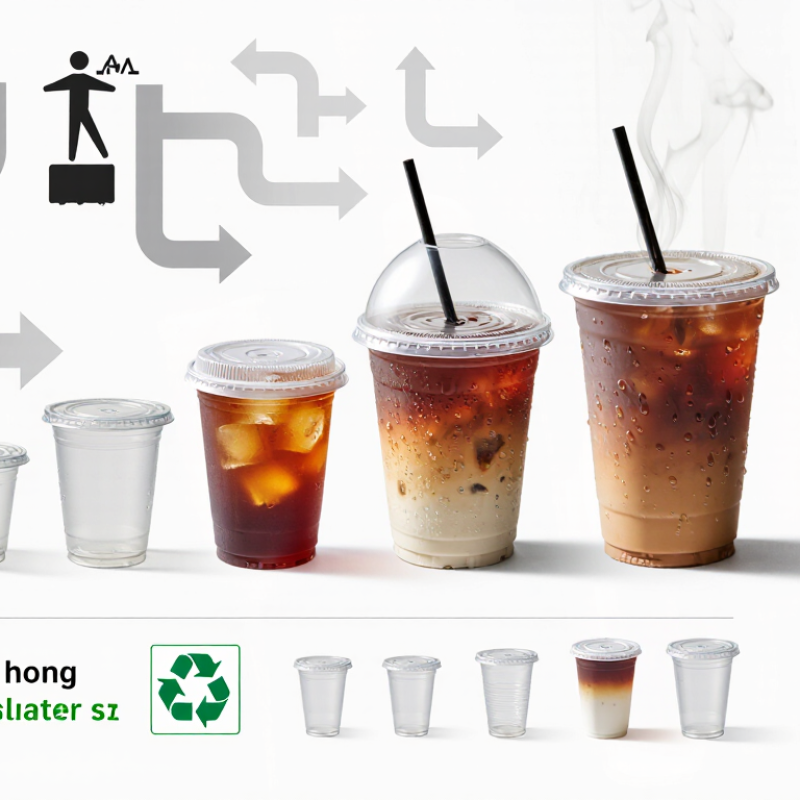
Start with where and how the cup will be used. A café counter, a school event, and a delivery order create different demands. For quick service, a snug, flat lid may be enough. For travel, choose a lid that resists splashes and stays secure when the cup tilts. Test the fit with the actual cup size; lids that look similar can have different rim diameters. Small details matter.
Match the cup material and lid opening to the drink. Cold water, juice, and iced coffee usually work well in clear cups, where guests can see the contents. A straw slot suits thicker drinks or iced beverages, while a small sip opening is more convenient for drinks without ice. Hot drinks need extra care: confirm that the cup is rated for the serving temperature, and consider whether a lid reduces spills without trapping too much heat. Never assume every plastic cup is suitable for hot liquids.
Think about the full serving, not just the beverage. Ice takes up space, and foam or toppings may need extra headroom. A lid that fits an overfilled cup can still leak. The categories are not always neat; a drink may need both a straw opening and room for toppings. Try a small sample with the intended drink before ordering in volume.
Choose capacity by the drink, ice load, and lid style, not the printed ounce size alone. A 16-ounce cup filled with ice may leave little room for liquid. Check the usable fill line, then test the actual drink in the cup. Fit matters. A lid should snap on evenly without rocking, even when the cup is gently tilted.
For cold drinks, clear PET shows the contents; polypropylene can suit warmer beverages when the cup is specifically rated for that use. Confirm material and temperature guidance with the supplier rather than relying on appearance. The U.S. EPA’s 2018 materials report recorded 35.7 million tons of plastic waste and an 8.7% recycling rate. Those figures cover all plastics, not cups, but they are a reminder to check local recovery options before choosing a material.
Wall strength depends on resin, thickness, cup shape, and rim design. A thick-looking sidewall may still buckle when stacked or squeezed. ASTM D642 describes compression testing for shipping containers, though it is not a cup-specific rating. Run a quick test. Fill several cups, stack them, carry them by hand, and check for leaks or lid pop-offs. I still find this easy to misjudge: a cup that feels firm empty can soften with a warm drink, so test under real serving conditions.
| Typical Capacity | Common Material | Wall Strength | Lid Considerations | Suitable Uses | Selection Tips |
|---|---|---|---|---|---|
| 8 oz (237 mL) | Usually PET or PP | Standard single-wall construction is often sufficient for a small serving; a thicker wall can feel sturdier. | Choose a lid designed for the cup’s rim diameter. Flat lids may have a straw opening; dome lids provide extra headroom. | Small cold drinks, samples, and children’s portions. | Allow room for ice and avoid filling to the rim. Check whether the lid opening suits the intended drink. |
| 12 oz (355 mL) | Usually PET or PP | Standard single-wall cups are common; consider a heavier-gauge cup when drinks contain ice or are carried frequently. | Flat straw-slot lids are common for cold drinks. Confirm that the lid fits the specific cup rim. | Juice, iced tea, soda, and smaller iced coffee servings. | A practical size for moderate portions. Choose a clear cup when visibility of the beverage matters. |
| 16 oz (473 mL) | PET is common for clear cold-drink cups; PP is also available. | Standard walls suit many everyday uses; thicker walls can improve rigidity during transport. | Check lid style and rim fit. A straw opening is useful for many iced drinks; a sip-style lid is suitable only when designed for that cup. | Iced coffee, smoothies, soft drinks, and take-away beverages. | Account for ice, foam, or toppings when estimating usable beverage volume. |
| 20 oz (591 mL) | Usually PET or PP | A sturdy or heavier-gauge wall can help reduce flex in a larger cup, especially when it is full. | Use a lid specified for the cup’s rim size and intended use; dome lids can accommodate toppings. | Large cold drinks, smoothies, and iced beverages. | Check that the cup fits available cup holders and that the lid stays secure during normal handling. |
| 24 oz (710 mL) | PET is common for clear cold-drink cups; PP options are also available. | For a large serving, look for a rigid, heavier-gauge option if the cup will be carried or transported. | Confirm rim compatibility and select a flat or dome lid according to the drink and toppings. | Large iced drinks, cold beverages, and share-size servings. | Consider the filled cup’s weight and transport needs, not just its empty capacity. |
Material and fit notes: PET is commonly used for clear cold-drink cups. PP generally tolerates heat better than PET, but not every disposable cup is suitable for hot liquids; follow the product’s temperature specifications. Cup capacity is typically the brim-full volume, so usable serving volume is lower when leaving room for a lid, ice, or foam. Plastic recycling acceptance varies by location, cup design, and local facility.
A lid should match the way a drink will be served, not just the cup’s diameter. Flat lids with a straw opening work well for iced drinks, especially when customers carry them between stops. Dome lids leave room for foam or toppings, but they need more storage space. Sip-through lids allow direct drinking without a straw. Small detail. The opening should feel comfortable and stay clear of ice.
Fit matters just as much as style. A lid that looks close may still leak if its rim does not lock evenly around the cup. Check the cup and lid together, since small differences in rim shape can affect the seal. Press around the edge and look for gaps. For a realistic test, add the usual drink and carry the cup at a slight angle. That simple check can reveal problems a dry sample misses.
Drinking options depend on both the opening and the beverage. A narrow straw slot suits many cold drinks, while a wider opening can make thicker drinks easier to sip. For hot beverages, choose a lid designed for hot use, and check that its sip opening directs liquid comfortably. One compromise: a tighter fit may feel secure but can take more effort to remove. Try a few samples with the intended cup before ordering in quantity.
How to Choose Disposable Plastic Cups With Lids
Disposable plastic cups with lids should meet food-safety requirements for their intended use. Check the product documentation for food-contact suitability, temperature limits, and instructions for hot or cold drinks. A cup designed for chilled juice may not be suitable for hot coffee. Ask the supplier for clear documentation, not just a general safety claim. Also check that lids fit securely; a loose lid can spill during a short walk or a bumpy delivery. Small details matter.
Environmental impact deserves equal attention. Look for the cup’s material and check whether local recycling facilities accept it. A recycling symbol alone does not guarantee that the item will be recycled in your area. It is easy to overvalue that symbol; verify the local rules instead. Consider using fewer cups, choosing a lighter design, or offering reusable options where practical. Still, a supposedly greener material is not automatically better if it requires special processing unavailable nearby.
Tips: Match the cup to the drink and serving temperature. Keep a sample filled for a few minutes, then check for leaks, softening, and lid fit. Compare disposal guidance with local facilities. Good information helps, but packaging claims can be incomplete, so ask specific questions before ordering.
Disposable plastic cups with lids can look inexpensive per unit, yet the real comparison includes cup size, lid fit, and delivery costs. Ask for the case quantity and calculate the cost per usable cup-and-lid set. A 12-ounce cup with a loose lid may waste more than a slightly pricier, snug-fitting option. Test a small sample with the drinks you actually serve. Cold brew, smoothies, and iced tea can behave differently. Small details matter.
Estimate a normal week’s use, then add a modest buffer for busy days. Avoid ordering several months of stock just to lower the unit price. The discount may vanish if cases get crushed or collect dust. I have seen a tidy spreadsheet overlook that. Real shelves are less tidy. Measure the storage area before ordering, including doorways and shelf height. Check case dimensions, not just the number of cups inside. Keep stock dry and away from heat, and leave room to rotate older cases forward. If cups and lids arrive separately, confirm there is space for both. A sample case can reveal awkward stacking before a large order arrives. It is not a perfect forecast, but it is a useful check.
Consider the drink, ice, and lid—not just the printed ounce size. A 16-ounce cup packed with ice may leave little room for liquid. Check the fill line with the actual drink.
Clear PET can show the drink inside. For warmer beverages, polypropylene may work if it is rated for that use. Ask the supplier about temperature guidance.
Fill several cups, stack them, and carry them by hand. Look for leaks or buckling. Test them with the real drink, since an empty cup can feel deceptively firm.
A flat lid with a straw opening is practical for many iced drinks. A dome lid leaves room for foam or toppings, but takes more storage space. Small detail.
Press around the rim and check for gaps. Add the usual drink, then tilt the cup slightly. A dry sample may not reveal leaks.
It lets people drink directly without a straw. Check that the opening feels comfortable and stays clear of ice.
A wider opening can make thicker drinks easier to sip. Try the opening with the intended cup before ordering a large quantity.
It may feel secure but take more effort to remove. I still find this easy to misjudge, so test a few samples in real serving conditions.
Choosing Disposable Plastic Cups With Lids starts with understanding how they will be used and what drinks they need to hold. Cold beverages, hot drinks, and thicker options may call for different cup materials and designs. Consider the capacity you need, along with wall strength: sturdier cups can be more comfortable to hold and less likely to bend during everyday service. Matching the cup to its intended use can help reduce spills and improve the drinking experience.
Next, compare lid styles, fit, and drinking options, such as sip openings or straw holes, and make sure the lid is compatible with the cup. Check that the products are suitable for food contact, and consider their environmental impact, including whether local recycling facilities accept the material. Finally, balance unit cost and order quantity against your expected use, and confirm that you have enough clean, dry storage space. These factors help you select a practical option without paying for features or quantities you do not need.
Santai Plastic