What Is Plastic Glass and Which Type Is Best?

Time:2026-10-01 Author:Aria
0%

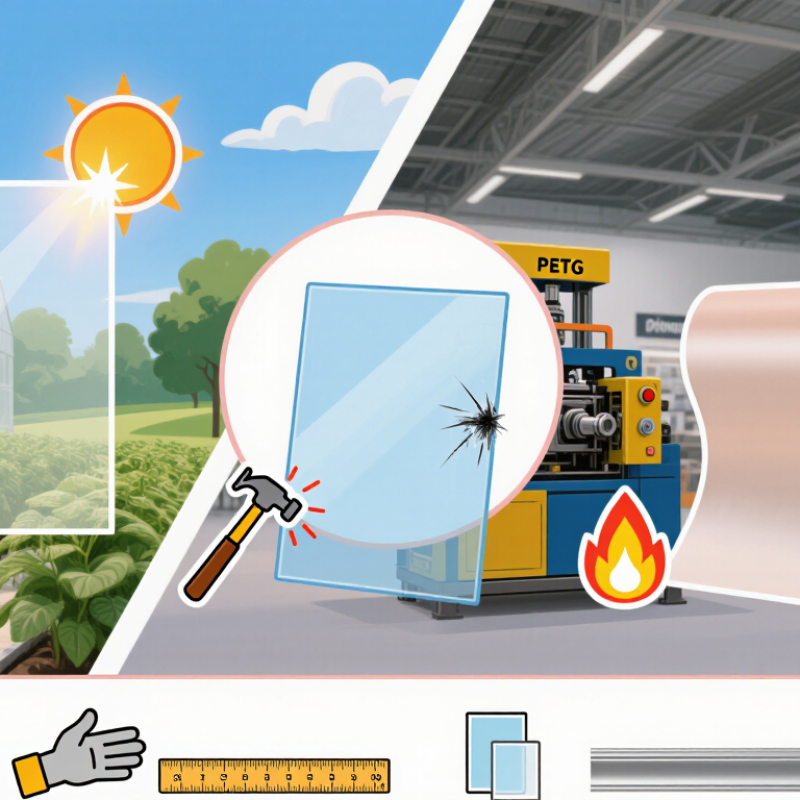
Plastic Glass is often presented as a simple alternative to conventional glass. That description is incomplete. It may refer to acrylic, polycarbonate, PETG, or other transparent plastics. Each material behaves differently under sunlight, impact, heat, and cleaning.

Dr. John Scheirs, a respected polymer specialist and author of Modern Plastics Handbook, offers a useful principle: “Material selection should begin with the service environment, not the product name.” This idea guides the comparison in this article. A clear sheet for a greenhouse may need excellent light transmission and weather resistance. A protective machine guard may need strong impact performance. A display panel may prioritize surface clarity and easy fabrication.

The differences are practical. Acrylic usually provides excellent optical clarity and outdoor stability. Polycarbonate offers much higher impact resistance, but it can scratch more easily without a hard coating. PETG is simple to form and useful for indoor displays, though heat resistance may limit its applications.

There is no universal winner.

That is the difficult part.

The “best” Plastic Glass depends on the job, budget, thickness, installation method, and expected lifespan. Even experienced buyers can overlook cleaning chemicals, edge protection, or expansion gaps. I have seen clear panels fail because the material was suitable, but the surrounding design was not.

This guide will compare the main types, explain their strengths and weaknesses, and identify suitable applications. It will also question common marketing claims. Transparency alone does not prove quality. A reliable choice requires evidence, realistic conditions, and careful attention to the details that are easy to miss.
What Is Plastic Glass and Which Type Is Best?

What Is Plastic Glass?

Plastic glass is not glass at all. It is a clear polymer designed to resemble traditional glass. Common options include acrylic, polycarbonate, and PETG. Each offers a different balance of clarity, strength, flexibility, and cost. In practical fabrication work, acrylic often provides a bright, polished appearance. Polycarbonate is better suited to areas where impact resistance matters. PETG is easier to bend and form.

The term “plastic glass” can mislead buyers. Sheet thickness, surface coating, and edge finishing affect performance significantly. For display panels, acrylic may be the most attractive choice. For protective screens, polycarbonate usually offers greater confidence. For curved parts, PETG can simplify production. Still, no material is best for every project. I have seen clear sheets fail because heat, sunlight, or harsh cleaners were ignored. That mistake is easy to repeat. My own preference changes with the application, which feels less convenient but more honest.

Tips: Check the material specification before purchasing. Measure the sheet, not only the frame. Use a soft cloth and mild soap for cleaning. Avoid abrasive pads, because tiny scratches spread under strong light. Ask whether the sheet has UV protection if it will stay outdoors. A test piece is worthwhile. It may reveal unexpected bending, glare, or color changes before the full installation.

How Plastic Glass Is Made and How It Differs from Real Glass

Plastic glass is usually acrylic or polycarbonate, not glass at all. Manufacturers begin with chemical monomers, then build long polymer chains. The material becomes pellets, sheets, or liquid resin. Extrusion pushes heated resin through a shaped opening. Injection molding forces it into a metal mold. Cast acrylic follows a different route. Liquid monomer cures between two polished plates, producing clear sheets with strong optical quality.

Real glass starts with silica sand, soda ash, and limestone. A furnace melts this mixture at roughly 1,400–1,600°C. The molten material is then floated, pressed, or blown into shape. Plastic glass needs far less processing heat. The European Commission’s Glass Manufacturing BREF identifies melting as the industry’s largest energy-consuming stage. Plastics Europe reported 400.3 million tonnes of global plastic production in 2022, showing the scale of polymer manufacturing. That figure covers every plastic, not only transparent sheets.

The difference appears in daily handling. Acrylic is lighter and often clearer, but it can crack under sharp impact. Polycarbonate handles impact better, yet it scratches more easily without a hard coating. Real glass resists scratching and stays stable under heat, but it is heavier and breaks into dangerous shards. I would not call plastic glass universally better. A clear panel beside a workshop window may survive a dropped tool, while a hot surface may warp it. This is where product testing matters. Check optical clarity, impact rating, temperature limits, and surface hardness. Cost comparisons alone can mislead. A cheaper sheet may need replacement sooner.

The Main Types of Plastic Glass and Their Key Properties

What Is Plastic Glass and Which Type Is Best?

The Main Types of Plastic Glass and Their Key Properties

Plastic glass usually means transparent plastic sheet used for windows, guards, displays, and indoor partitions. The main choices are acrylic, polycarbonate, PETG, and polypropylene. Each behaves differently under impact, heat, scratching, and outdoor exposure.

Acrylic offers excellent clarity and good resistance to sunlight. It is lighter than ordinary glass, but it can crack under a sharp impact. Polycarbonate is tougher and more suitable for machine guards, sports barriers, and high-impact panels. However, it scratches more easily unless it has a hard coating. PETG is easy to form and works well for curved covers and retail displays. Its heat resistance is more limited. Polypropylene is chemically resistant and useful in industrial settings, though its transparency is usually lower.

The compromise is easy to miss.

Plastics Europe reported global plastics production of 413.8 million tonnes in 2023, showing the scale of this material sector. That figure does not identify the best sheet for a project. It only shows why careful selection matters. ASTM D1003 testing measures haze and light transmission, while ASTM D256 evaluates impact resistance. These tests are more useful than appearance alone. A clear panel can still fail quickly near heat, solvents, or repeated vibration. Field checks should include thickness, edge quality, coating durability, and temperature exposure. A thicker sheet is not automatically safer. Procurement teams sometimes overlook installation stress, which can cause premature cracking even when the material specification appears correct.

How to Choose the Best Plastic Glass for Different Uses

Choosing the best plastic glass depends on where and how you will use it. Acrylic is lightweight, clear, and suitable for home dining or outdoor tables. It resembles ordinary glass, but it can scratch more easily. Polycarbonate offers stronger impact resistance, making it useful for busy kitchens, events, and travel. It may cost more, yet its durability can reduce replacement waste. Copolyester options provide good clarity and often resist odors better than softer plastics.

For cold drinks, nearly any food-grade plastic glass can work. Hot beverages require more care. Check the manufacturer’s temperature range before pouring tea or coffee. A glass designed for cold juice may warp under heat. Look for clear food-contact information, a stable base, and a rim without sharp molding lines. Those small details affect comfort and cleaning.

Dishwasher use can be convenient, but repeated heat may cloud some materials. Hand washing is gentler, especially for clear acrylic. I would also test one glass before buying a full set. Fill it, hold it with wet hands, and inspect it under bright light. A textured surface may improve grip, although it can trap residue. Plastic glasses are not perfect. Scratches, staining, and heat damage still happen. Choose the material that matches the real conditions, not the most attractive product description.

What Is Plastic Glass and Which Type Is Best?

Typical continuous-use temperature of common transparent and translucent plastics

Polycarbonate is usually the best choice where impact resistance matters, while acrylic offers excellent optical clarity and weather resistance. Polypropylene is better for repeated exposure to warmth, PET is a lightweight option for cold drinks and short-term use, and polystyrene is mainly suited to lower-cost, low-temperature applications. Actual limits vary by grade, thickness, additives, and product design.

Plastic Glass Safety, Care, and Environmental Considerations

What Is Plastic Glass and Which Type Is Best?

Plastic glass usually means a clear drinking vessel made from materials such as polycarbonate, acrylic, PET, or polypropylene. The best choice depends on temperature, impact risk, and reuse frequency. Polypropylene often suits warm drinks, but its heat rating varies by product. Acrylic offers strong clarity, yet it can crack under impact. PET feels light and clear, though it is generally better for short-term use than repeated heating. No plastic glass is perfect.

Safety starts with the manufacturer’s temperature instructions and food-contact testing. Do not pour boiling liquid into an unrated cup. Heat, scratches, and harsh detergents can increase material wear. A cloudy surface is a warning sign. Replace deeply scratched or cracked drinkware. Hand washing may preserve clarity, although some products are dishwasher-safe. Check the base and care label carefully.

Environmental performance is more complicated than recyclability claims suggest. The OECD’s Global Plastics Outlook reported 353 million tonnes of plastic waste in 2019, with only 9% recycled. Reuse can reduce replacement demand, but only when the cup remains clean, safe, and frequently used. A durable polypropylene cup may outperform a fragile clear cup over time. Still, transport and washing require energy. That part is easy to overlook. My cautious view is simple: choose a tested, reusable vessel, use it within its limits, and keep it until wear—not fashion—requires replacement.

What Is Plastic Glass and Which Type Is Best? - Plastic Glass Safety, Care, and Environmental Considerations

“Plastic glass” generally refers to clear or translucent plastic sheets, panels, containers, or lenses that are used as lighter alternatives to conventional glass.

Material Typical Density Optical Clarity Impact Performance UV and Weathering Heat Performance Safety and Chemical Notes Care Requirements Environmental Considerations Best-Suited Uses
Acrylic
(PMMA)
Approximately 1.17–1.20 g/cm³ Very high clarity; visible-light transmission is commonly around 90–92% for clear sheet. More impact-resistant than ordinary glass, but substantially less impact-resistant than polycarbonate. It can crack or shatter under a severe impact. Generally very good natural resistance to sunlight and outdoor weathering. UV-stabilized grades provide additional protection. Typical continuous-use temperatures are around 80–90°C, depending on grade and design. Generally suitable for many indoor applications. It may craze or weaken when exposed to certain solvents, alcohols, or aggressive cleaners. Use lukewarm water, mild soap, and a clean microfiber cloth. Avoid ammonia, abrasive pads, dry dusting, and solvent-based cleaners. Recycling availability is limited and varies by location. Many recovery systems do not accept acrylic sheet, so reuse is preferable where practical. Display panels, skylights, signs, interior glazing, aquarium panels, and applications prioritizing clarity and weatherability.
Polycarbonate
(PC)
Approximately 1.20 g/cm³ High clarity; clear sheet commonly transmits approximately 86–90% of visible light. Very high impact resistance and significantly tougher than acrylic. It is often selected where accidental impact or vandalism is a concern. Uncoated material can yellow or lose surface performance outdoors. UV-protected or co-extruded grades are preferred for long-term exterior use. Higher heat resistance than acrylic; many grades tolerate continuous service near 115–130°C, subject to load and manufacturer specifications. Good for protective glazing, but scratches more easily than glass unless hard-coated. Food-contact or medical use requires a compliant, certified grade. Wash with mild soap and water using a soft cloth. Avoid abrasive cleaners, strong alkalis, aromatic solvents, and ammonia-based products unless specifically approved. Recycling systems and collection rules differ widely. Clean, separated material has a better chance of recovery than mixed or coated products. Machine guards, safety glazing, protective barriers, sports enclosures, security panels, and high-impact applications.
PETG
(Polyethylene Terephthalate Glycol-Modified)
Approximately 1.27 g/cm³ Good to very good clarity, commonly around 88–90% visible-light transmission for clear sheet. Good impact resistance and less brittle behavior than acrylic. It is generally not as impact-resistant as polycarbonate. Outdoor durability is moderate. Long-term sunlight exposure may require UV-stabilized grades or a protective finish. Lower heat resistance than polycarbonate; softening and deformation can occur at relatively modest temperatures. Often used for formed packaging and guards, but suitability for food, medical, or chemical contact depends on the exact formulation and applicable regulations. Clean with mild detergent, water, and a soft cloth. Avoid abrasive materials and cleaners that can cause stress cracking. Some PETG products may be technically recyclable, but local facilities may not accept them, especially when mixed with conventional PET streams. Point-of-sale displays, formed covers, packaging, indoor partitions, and projects requiring easy thermoforming.
Clear PVC
(Polyvinyl Chloride)
Approximately 1.30–1.45 g/cm³ Clear grades provide useful transparency, although clarity and color stability vary considerably by formulation. Moderate impact resistance; flexible grades resist bending, while rigid grades can become brittle in cold conditions or with aging. Outdoor performance depends heavily on stabilizers and plasticizers. Some formulations can discolor, become brittle, or lose flexibility over time. Lower heat tolerance than polycarbonate and acrylic. Excessive heat can cause deformation or release irritating decomposition products. Use only grades intended for the specific application. Plasticizers and additives vary, so food-contact, medical, and indoor-air requirements must be verified. Use mild soap and water. Avoid incompatible solvents, high heat, abrasive tools, and cleaners that can extract or damage additives. Recycling is technically possible but less widely available than for common PET or HDPE containers. Avoid burning, because uncontrolled combustion can produce hazardous gases. Flexible curtains, tubing, covers, temporary partitions, and cost-sensitive indoor applications.
Tempered Glass
(Reference Material)
Approximately 2.5 g/cm³ Very high clarity and excellent long-term optical stability. Higher scratch resistance than most plastics, but it can still break when subjected to severe impact or edge damage. When it breaks, it generally forms small granular pieces. Excellent resistance to sunlight, moisture, and most outdoor weathering conditions. Very good heat resistance and resistance to thermal shock compared with ordinary annealed glass, although sudden extreme temperature changes can still cause failure. Rigid and heavy. Broken edges and fragments can still cause injury, and tempered glass cannot be cut or drilled after tempering. Use standard glass-cleaning methods, avoiding impacts at edges and corners. Inspect for chips or damage before use in safety-critical locations. Glass can be recycled repeatedly in suitable systems, but tempered architectural or coated glass may require separate processing from container glass. Applications requiring maximum scratch resistance, high optical stability, heat resistance, and a rigid premium finish.
Choosing the Best Type For maximum clarity and outdoor stability: Acrylic is often a strong choice. For maximum impact protection: UV-protected polycarbonate is usually preferred. For easy forming and indoor displays: PETG can be practical. For low cost or flexibility: Clear PVC may be suitable when its additives and service conditions are acceptable. The best material depends on impact risk, sunlight exposure, temperature, scratch requirements, chemical contact, desired weight, budget, and local recycling options.
General Safety Checklist Confirm the product’s thickness, load rating, flammability classification, UV protection, and intended-use certification before installation. Do not assume that every clear plastic is food-safe, medical-grade, fire-rated, or suitable for prolonged outdoor exposure. Keep protective films on during fabrication, support large panels correctly, and replace material showing deep scratches, cracks, chemical damage, or severe discoloration.
General Environmental Checklist Prefer durable products that can be reused for a long service life. Choose a single-material design when possible, avoid unnecessary coatings or difficult-to-separate laminates, and check local recycling guidance before disposal. Never burn plastic glass in an open fire or household stove.

FAQS

What is plastic glass?

Plastic glass is a clear polymer sheet, not real glass. Common materials include acrylic, polycarbonate, and PETG. It can look bright and polished.

Which plastic glass material is best for displays?

Acrylic often suits display panels because it offers strong clarity and an attractive finish. It is not ideal for every display. Sharp impacts may crack it.

Which material is better for protective screens?

Polycarbonate usually provides stronger impact resistance. It can handle a dropped tool better than acrylic. However, it scratches more easily without a hard coating.

Is PETG useful for curved parts?

Yes. PETG is easier to bend and form. This can simplify curved fabrication. A small test piece may still reveal unexpected distortion.

How does plastic glass differ from real glass?

Plastic glass is lighter and needs less processing heat. Real glass resists scratches and tolerates heat better. It is heavier and can break into dangerous shards.

How is plastic glass manufactured?

Manufacturers build polymer chains from chemical monomers. Heated resin may become sheets through extrusion. Liquid monomer can also cure between polished plates.

Can plastic glass be used outdoors?

It can, but sunlight and heat may cause problems. Ask about UV protection before purchasing. Warping or color changes are possible.

How should plastic glass be cleaned?

Use a soft cloth, mild soap, and gentle pressure. Avoid abrasive pads. Tiny scratches become obvious under strong light.

What should buyers check before purchasing?

Check the material, thickness, surface coating, edge finish, optical clarity, and temperature limits. Measure the sheet, not only the frame. Cost alone can mislead.

Is plastic glass always better than real glass?

No material wins every situation. Plastic glass may suit lightweight panels, but heat can expose its weaknesses. I would test the application first.

Conclusion

Plastic Glass is a clear or translucent material designed to provide the appearance and practical functions of traditional glass while offering lower weight and greater impact resistance. It is made by shaping transparent polymers through processes such as molding, extrusion, or sheet forming. Unlike real glass, it is less likely to shatter, easier to transport, and often simpler to cut or install, although it may scratch more easily, expand with heat, or become cloudy over time.

The main types include acrylic, polycarbonate, and other clear plastic materials, each with different levels of clarity, strength, flexibility, weather resistance, and heat tolerance. Choosing the best Plastic Glass depends on its intended use: acrylic suits decorative panels and displays, while polycarbonate is better for situations requiring high impact protection. Safe handling, gentle cleaning, suitable storage, and protection from excessive heat can extend its service life. Environmental considerations are also important, so users should favor durable products, reduce unnecessary replacement, and follow local recycling guidance whenever possible.


Aria

Aria

Aria is a dedicated marketing professional with a deep passion for innovative strategies and a keen understanding of our company's product offerings. With a wealth of experience in the industry, Aria excels at crafting engaging content that highlights the unique features and benefits of our......