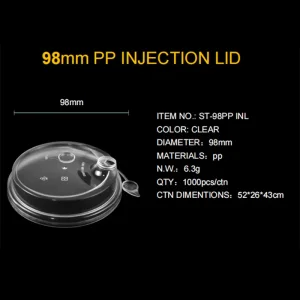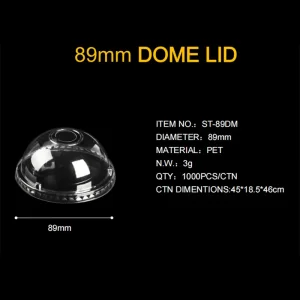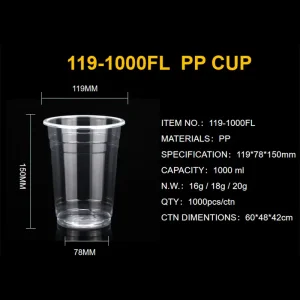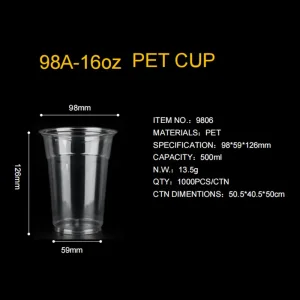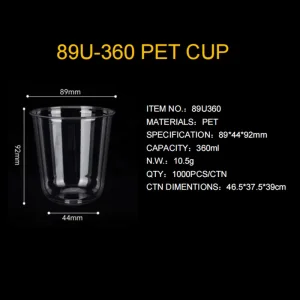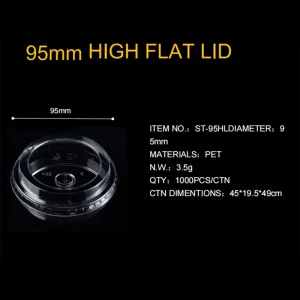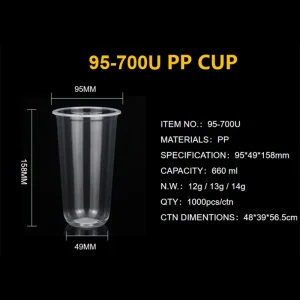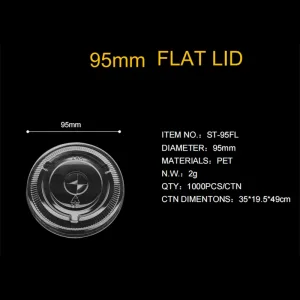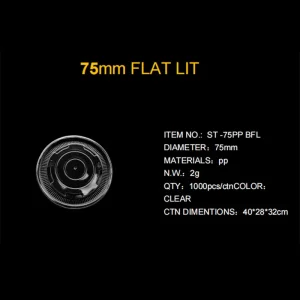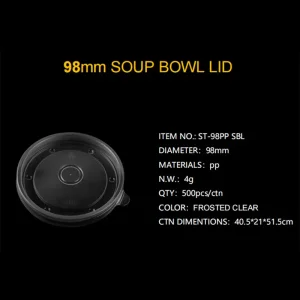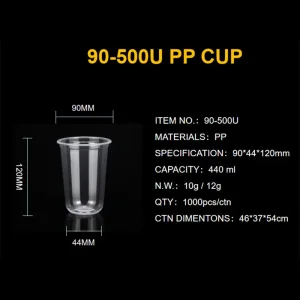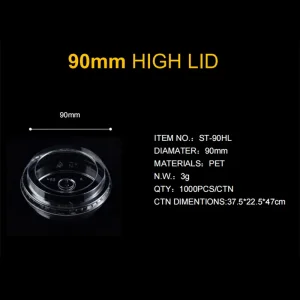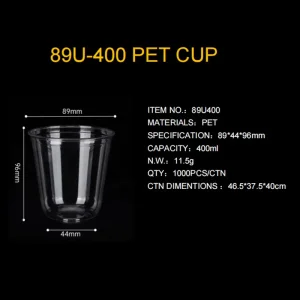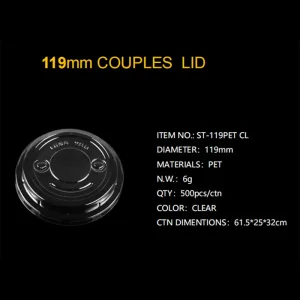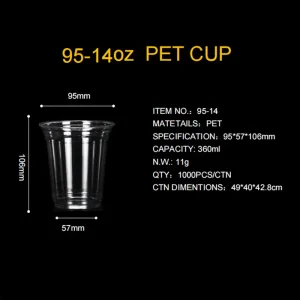


Our material scientists continuously optimize resin formulations. For instance, our PP98 injection molded lids are engineered to withstand temperatures exceeding 100°C without dimensional deformation or chemical leaching. Conversely, our PET95 and PETU products utilize virgin polymer structures to achieve optical clarity comparable to glass, meeting the aesthetics demand for premium cold brew presentations.
Our production floor operates 30 thermoforming lines and 20 advanced extrusion production lines. Using CNC machined mold tooling, we achieve tight tolerances of within ±0.1mm. This microscopic precision ensures that flat lids, dome covers, and cup rims seal with an audible snap, completely eliminating edge leakage and reducing customer operational failures on the floor.
Our developmental roadmap points heavily toward a circular economy. In response to global single-use plastic restrictions, we have scaled production of PLA (Polylactic Acid) biodegradable materials and high-purity paper drinking straws. We are actively refining bioplastic formulations that offer identical rigidity and thermal properties to traditional fossil-based PP, ensuring future-proof brand compliance.

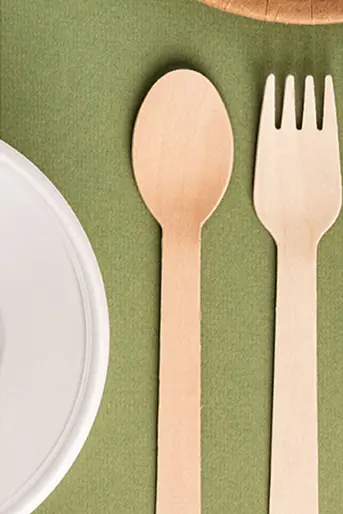
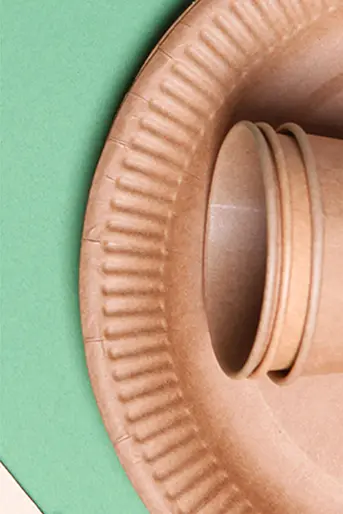
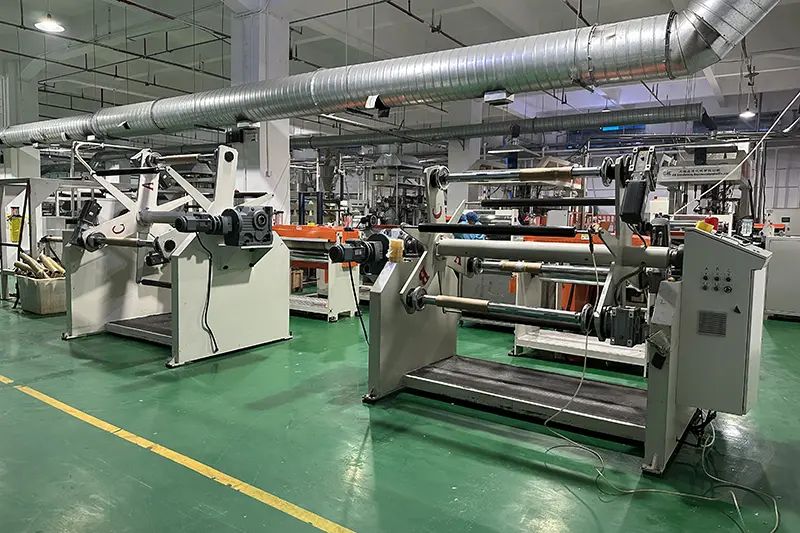
PP (Polypropylene) is heat-tolerant (typically up to 100°C–120°C depending on specific blends, like our PP98 or PP90 series) and is microwave-safe, making it perfect for hot coffee, tea, and warm food storage. PET (Polyethylene Terephthalate) offers superior optical clarity and structural rigidity but has lower heat tolerance (typically up to 60°C), making it ideal for iced coffees, frappes, and cold juices. PLA (Polylactic Acid) is a bio-based compostable alternative that performs similarly to PET for cold beverages, aligning with strict environmental mandates.
Perfect sealing relies on mold precision and consistent raw material feed rates. Our in-house engineering team uses high-speed CNC tooling to design matching cup rims and lid channels. By running continuous line checks during extrusion and thermoforming, we ensure diameter tolerances remain within ±0.1mm. This eliminates leak paths, offering food service staff and end-consumers reliable, spill-proof seals.
Yes. Our custom printing facilities utilize high-speed curved-surface printing equipment capable of running up to 6 colors with precise color registration. We employ eco-friendly food-safe inks that are UV cured to guarantee dry, smudge-proof print results that maintain clarity even when exposed to condensation.
For custom configurations, our engineering team can produce 3D CAD models and prototype molds within 7 to 10 days. Once the client approves the prototype, mass tooling takes approximately 15 to 20 days. Production timelines depend on order volume, but our standard export container dispatch is completed within 20 to 30 days from confirmation.
We use heavy-duty corrugated export boxes containing inner moisture-barrier PE bags to protect all cups and lids. Our logistics team employs specialized stacking configurations inside shipping containers to spread load pressure evenly. This prevents bottom cartons from collapsing during high-vibration ocean shipping, which was highlighted as a key advantage by our Southeast Asian beverage chain customers.
Absolutely. All raw materials (whether virgin PP, PET, or bio-based PLA) undergo strict incoming inspection and certified food-contact compliance tests. Our manufacturing is performed in localized constant-temperature cleanrooms, guaranteeing compliance with FDA 21 CFR and European Union food contact material safety standards.
Due to the calibration requirements of high-speed extrusion and thermoforming lines, the typical MOQ for custom printed runs starts at 50,000 pieces per size. For custom custom-molded physical designs, the MOQ starts at 100,000 pieces to offset the cost of dedicated tool engineering.
 Santai Plastic