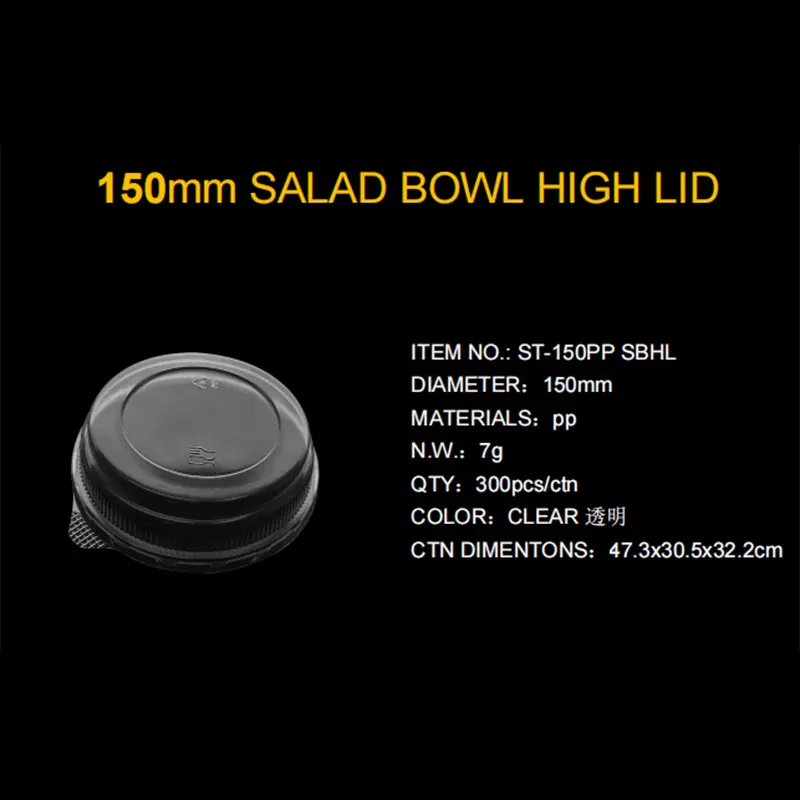
China PP150 Salad Bowl with High Lid, Heat Resistant Manufacturer, Supplier

Food-grade PP plastic bowls, made from polypropylene (PP), are safe, durable, and high-temperature resistant, suitable for microwave heating and boiling water sterilization. They feature high surface gloss, excellent sealing, and corrosion resistance, though they have weak low-temperature impact resistance. Ensure raw material safety labels to confirm food-safety.

Product Description

Product Advantages

Polypropylene (PP) material meets stringent FDA and EU food safety standards, ensuring it is non-toxic, odorless, and chemically inert. This makes it a preferred choice for food contact applications. PP boasts exceptional mechanical properties including superior impact and fold resistance, which ensures durability even under stress. Its strong temperature tolerance allows it to withstand both hot and cold environments, making it ideal for a variety of uses. Additionally, PP is lightweight, contributing to ease of handling and transportation, and cost-effective, providing a balance between quality and affordability. The material offers high transparency, allowing for clear visibility of contents, and is highly recyclable, aligning with sustainable practices. PP also exhibits moisture-proof and barrier properties, effectively protecting contents from external elements. These attributes make PP material suitable for diverse applications such as food containers, drink cups, and long-term storage solutions, ensuring both functionality and safety.

Feature

PP lids are suitable for microwave heating due to Polypropylene's excellent heat resistance, maintaining integrity at high temperatures. They prevent food from absorbing odors, preserving original flavors and making them ideal for storing and reheating aromatic foods like garlic or onions.

Introduction

Polypropylene (PP) is widely used due to its lightweight, chemical resistance, and excellent electrical insulation. This versatile polymer is known for its high strength-to-weight ratio, making it ideal for various demanding applications. Its chemical resistance allows it to withstand exposure to acids, bases, and solvents, which makes it suitable for use in harsh environments. The material's excellent electrical insulation properties make it a preferred choice for electronic components and insulating materials.

Key applications of polypropylene include industrial components such as gears, housings, and casings, where its durability and lightweight nature are crucial. In the medical field, PP is used to manufacture disposable syringes, surgical instruments, and protective equipment due to its non-reactive nature and ease of sterilization. For food packaging, polypropylene is favored for its transparency, barrier properties against moisture and gases, and compliance with food safety regulations.

In the automotive industry, PP is utilized in the production of bumpers, battery cases, and interior components like dashboards and door panels, benefiting from its impact resistance and cost-effectiveness. Home appliances often incorporate PP in parts such as washing machine drums and refrigerator linings, taking advantage of its thermal stability and aesthetic appeal. Construction materials made from PP, including pipes and sheets, benefit from its corrosion resistance and long lifespan.

Electronics manufacturers use polypropylene for insulating cables, connectors, and housings due to its dielectric properties and flame retardancy. In the textile industry, PP fibers are spun into fabrics for items like outdoor clothing, upholstery, and geotextiles, leveraging their strength, low moisture absorption, and resistance to UV radiation. Agricultural applications of PP include mulch films, greenhouse covers, and irrigation systems, where its durability and environmental compatibility are essential.
Frequently Asked Questions
1. Is Polypropylene (PP) material safe for food contact?
Yes, PP meets stringent FDA and EU food safety standards. It is non-toxic, odorless, and chemically inert, making it a safe choice for food containers and storage.
2. Can I use PP products in the microwave?
Yes, PP has excellent heat resistance, which allows it to maintain its integrity at high temperatures, making it suitable for microwave heating.
3. What are the key mechanical properties of PP?
PP is known for its superior impact and fold resistance, high strength-to-weight ratio, and excellent electrical insulation properties, ensuring durability under stress.
4. Is PP material environmentally friendly?
Yes, Polypropylene is highly recyclable, aligning with sustainable practices and reducing the environmental impact of plastic waste.
5. Why is PP used in the medical industry?
PP is used in medical applications because of its non-reactive nature, ability to withstand sterilization processes, and overall chemical resistance.
6. How does PP perform in harsh environments?
PP is highly resistant to acids, bases, and solvents, allowing it to withstand exposure to harsh chemicals and environmental elements, which is why it is used in automotive and industrial sectors.

Related Products