 Santai Plastic
1 / 1
Polypropylene (PP) meets FDA and EU food safety standards, ensuring it is safe for direct contact with food and beverages. This material is non-toxic, odorless, and chemically inert, making it suitable for various applications without compromising health.
Meets FDA and EU standards; non-toxic, odorless, and chemically inert for direct food contact.
High tensile strength and impact resistance ensure durability and long-lasting performance.
Withstands both hot and cold temperatures — ideal for microwavable and freezer-safe products.
Reduces transportation costs and makes handling easier while offering quality at an affordable price.
Contributes to environmental sustainability and aligns with global eco-friendly manufacturing goals.
Prevents absorption of liquids and maintains product integrity throughout storage and use.
Polypropylene's versatility extends to its compatibility with various manufacturing processes such as injection molding, extrusion, and thermoforming, enabling the creation of diverse shapes and sizes. Its chemical inertness ensures that it does not react with most acids, bases, and solvents, preserving the flavor and nutritional value of food and beverages stored within.
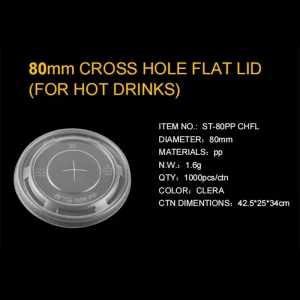
PP lids are suitable for microwave heating due to Polypropylene's heat resistance, allowing them to withstand high temperatures.
Ensures no harmful chemicals leach into your meals, making PP lids a safe choice for everyday food storage.
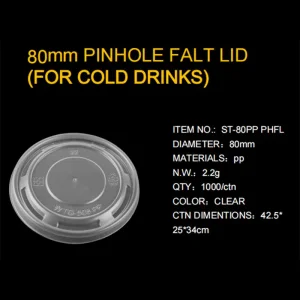
The transparent design allows you to easily see the contents of your container without removing the lid.
Offers convenient cleaning and maintains hygiene standards, saving time and ensuring thorough sanitation.
Provides a tight seal to keep food fresh and prevent spills, preserving natural flavors.
Compatible with various containers including glass, plastic, and metal, enhancing overall convenience.
Polypropylene is widely used in industrial components like gears and housings due to its high strength-to-weight ratio. In medical fields, it is biocompatible and withstands sterilization.
PP is preferred for containers due to safety compliance. Automotive parts, including battery casings, leverage PP's thermal stability.
Utilized in dishwasher-safe utensils and construction pipes, benefiting from heat resistance and corrosion resistance.
Overall, PP's combination of mechanical strength, chemical resilience, and regulatory approval makes it an indispensable material in modern manufacturing and daily life.
Yes. Polypropylene meets FDA and EU food safety standards. It is non-toxic, odorless, and chemically inert, making it one of the safest plastics for food storage.
Yes. PP lids and containers are microwave-safe due to excellent heat resistance. They withstand high temperatures without degrading or releasing harmful substances.
Polypropylene is used in food packaging, medical devices, automotive, construction, electronics, textiles, and agriculture due to its versatility and cost-effectiveness.
Yes. Polypropylene is highly recyclable and classified under resin identification code #5, contributing to environmental sustainability goals.
PP offers superior mechanical properties, including high tensile strength and impact resistance, maintaining structural integrity under stress and temperature fluctuations.