Home >
PP Lid >
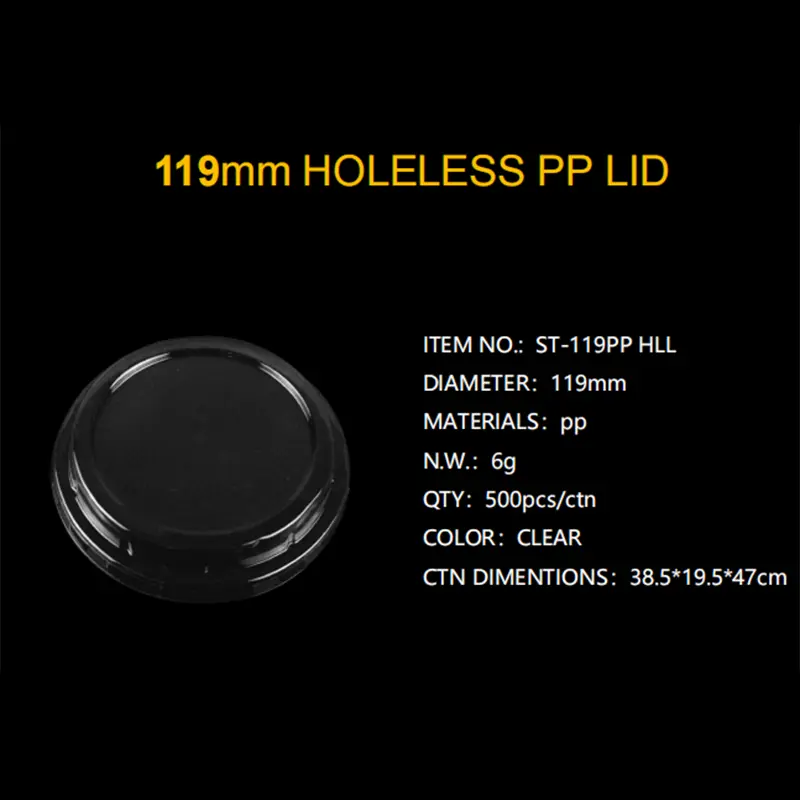
China PP119 holeless cover can withstand high temperatures Manufacturer, Supplier
1 / 1
China PP119 holeless cover can withstand high temperatures Manufacturer, Supplier
Food-grade PP plastic bowls are made from polypropylene (PP), a versatile thermoplastic polymer known for its safety, durability, and high-temperature resistance up to 100°C. This makes them ideal for various kitchen applications, including microwave heating and boiling without compromising on safety. The material's excellent corrosion resistance ensures longevity even when exposed to acidic or alkaline substances, while its lightweight design offers convenience and ease of handling. Superior sealing properties make these bowls perfect for storing food items, preventing leaks and spills. However, one limitation of PP plastic is its weak low-temperature impact resistance, which can lead to brittleness at colder temperatures. This issue is often mitigated through the addition of fillers or reinforcements during the manufacturing process, enhancing overall performance. To ensure food safety and compliance with health standards, it is crucial to identify raw material safety labels, such as FDA approval or EU regulations, which guarantee that the plastic used meets stringent quality and safety criteria.
Polypropylene (PP) material excels in food safety, meeting stringent FDA and EU standards, ensuring it is non-toxic, odorless, and chemically inert. This makes it a preferred choice for food contact materials. PP boasts excellent mechanical properties, including superior impact and fold resistance, which ensures durability even under stress. Its strong temperature tolerance allows it to maintain integrity across a wide range of temperatures, from freezing to microwaving, without degrading. The lightweight nature of PP further enhances its appeal for food packaging applications by reducing transportation costs and environmental impact.
Moreover, PP offers high transparency, allowing consumers to see the contents clearly, which is crucial for aesthetic appeal and product visibility. Its recyclability aligns with sustainable practices, contributing to reduced waste and lower environmental footprint. Moisture-proof features make PP an excellent barrier against humidity, preserving the freshness and quality of packaged foods. The wide-ranging usability of PP extends to various forms such as films, containers, and trays, catering to diverse packaging needs in the food industry.
Feature
PP lid is ideal for microwave heating due to its excellent heat resistance. It prevents food from absorbing odors, making it suitable for various microwave applications.
Introduction
Polypropylene (PP) is widely used across various sectors due to its lightweight, chemical resistance, and excellent processing properties. This versatile thermoplastic polymer is known for its high strength-to-weight ratio, low cost, and good moisture resistance, making it an ideal material for numerous applications. Key applications include:
Industrial: chemical containers, pipes, mechanical parts.
Medical: medical instruments, surgical tools, packaging.
Home appliances: refrigerator exteriors, washing machine covers.
Construction: building pipes, insulation materials, floor materials.
Electronics: cable sheaths, sockets, switches.
Textile: carpets, ropes, clothing.
Agriculture: agricultural films, water pipes, packaging.
Frequently Asked Questions
1. Is PP material safe for food contact?Yes, PP material excels in food safety, meeting stringent FDA and EU standards, and is non-toxic, odorless, and chemically inert.
2. Can PP containers be used in the microwave?Yes, PP has excellent heat resistance, making it ideal for microwave heating without degrading.
3. Why is PP preferred for food packaging?PP is preferred due to its moisture-proof barrier properties, transparency, lightweight nature, and excellent durability.
4. Is Polypropylene (PP) recyclable?Yes, PP is recyclable, which aligns with sustainable practices and helps reduce environmental footprint.
5. Does PP have good transparency?Yes, PP offers high transparency, allowing consumers to clearly see the contents inside the packaging.
6. Is PP resistant to chemicals?Yes, PP is chemically inert and resistant to various chemicals, making it suitable for industrial and medical applications.
 Santai Plastic